Morocco 2030: How Digital Transformation is Reshaping Business Through Automation
Explore Morocco's Vision 2030 digital transformation initiatives and how businesses are leveraging automation, AI, and chatbots to modernize operations and compete globally.
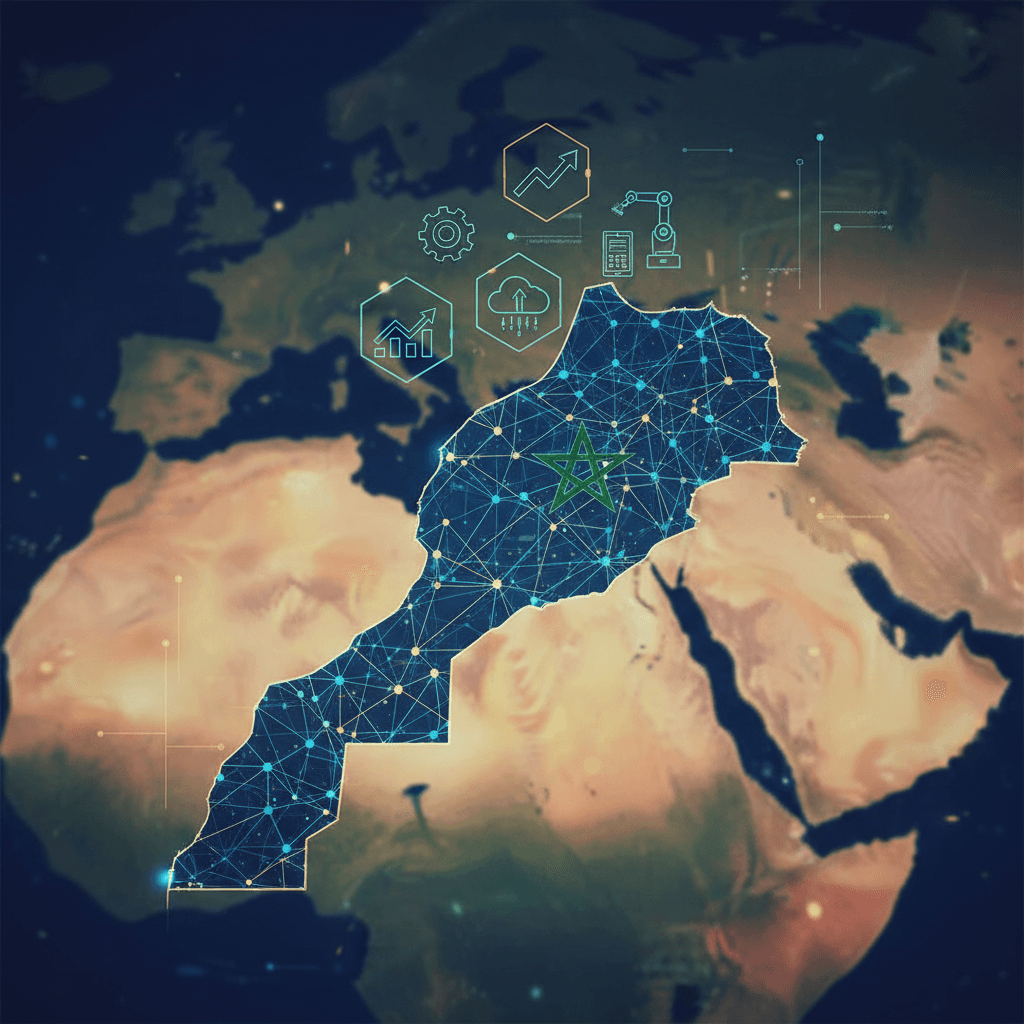
Morocco 2030: How Digital Transformation is Reshaping Business Through Automation
Morocco is undergoing a profound digital transformation. Under the Morocco 2030 Vision, the kingdom is investing billions of dirhams to modernize infrastructure, digitalize government services, and position itself as a regional technology hub.
For businesses, this transformation creates unprecedented opportunities—and competitive pressures. Companies that embrace automation and digital tools are scaling rapidly. Those that resist risk obsolescence.
This article examines Morocco's digital transformation landscape, the role of business automation, and how forward-thinking companies are leveraging AI and chatbots to thrive in the new economy.
Morocco 2030: The Digital Vision
King Mohammed VI's Vision 2030 sets ambitious goals across economic, social, and technological dimensions. The digital transformation pillar focuses on:
Infrastructure Modernization
- 5G nationwide rollout by 2027 (Maroc Telecom, Orange Morocco, Inwi)
- Fiber optic expansion: 3 million households by 2026 (currently 1.2M)
- Data centers: Morocco positioning as Africa's cloud hub (Google Cloud region announced)
- Smart cities: Casablanca Finance City, Marrakech Tech Park, Tangier Tech Valley
E-Government Services
Morocco's Digital Administration Strategy 2030 aims for:
- 100% of government services available online
- Elimination of paper-based bureaucracy
- Blockchain-based identity verification
- AI-powered citizen support chatbots
Progress: 60% of administrative procedures digitalized as of 2026, up from 20% in 2020.
Economic Digitalization
Key initiatives:
- Maroc PME Digital: Supporting SMEs with technology adoption grants (up to 500,000 MAD per company)
- Startup incubators: 15 major innovation hubs across Morocco (Casablanca, Rabat, Marrakech, Tangier, Agadir)
- Tech talent development: Training 50,000 developers, data scientists, AI specialists by 2030
- Foreign investment: Tax incentives for tech companies establishing Moroccan operations
Tourism Digitalization
Morocco targets 26 million tourists by 2030 (from 14M in 2024). Digital experience is central:
- Contactless check-in at airports and hotels
- Digital payment infrastructure (QR codes, NFC)
- Multilingual AI assistants for tourist information
- Virtual tours and AR experiences at heritage sites
Current Status: Morocco ranks 3rd in Africa for digital readiness (2026 Digital Economy Index).
The Business Imperative: Automate or Fall Behind
Morocco's digital transformation isn't just government-led—it's market-driven. Customer expectations are changing rapidly:
The Modern Moroccan Customer
- Mobile-first: 85% of internet access via smartphones
- Instant gratification: Expect responses within minutes, not hours
- Digital payment adoption: 70% of urban consumers use mobile wallets or cards
- Global standards: Compare Moroccan businesses to international benchmarks
Implication: Businesses must match digital-native customer expectations or lose market share to competitors who do.
Competitive Pressure
International companies are entering Morocco with advanced digital capabilities:
- Retail: Zara, H&M with omnichannel experiences
- Food delivery: Glovo, Deliveroo with AI-optimized logistics
- Finance: Digital banks (Bank Assafa, Wafacash) with app-only services
- Hospitality: Booking.com, Airbnb with automated booking and support
Survival strategy: Match or exceed international digital experience while maintaining local cultural relevance.
Business Automation: Morocco's Adoption Landscape
Current Adoption Rates (2026 Data)
| Sector | Automation Adoption | Primary Use Cases |
|---|---|---|
| Banking & Finance | 75% | Chatbots for customer service, automated loan processing, fraud detection |
| Telecommunications | 85% | Self-service support, automated billing, network optimization |
| E-commerce | 60% | Inventory management, customer support chatbots, dynamic pricing |
| Hospitality | 45% | Booking automation, guest communications, review management |
| Manufacturing | 40% | Production line automation, supply chain optimization, quality control |
| Retail | 35% | Point-of-sale automation, inventory tracking, customer engagement |
| Healthcare | 30% | Appointment scheduling, patient communication, prescription management |
| Professional Services | 25% | Document automation, client communication, project management |
Trend: Automation adoption growing 20-30% year-over-year across all sectors.
What Moroccan Businesses Are Automating
1. Customer Service & Support
The Problem: Customer inquiries growing faster than support teams can scale
The Solution: AI chatbots handling FAQs, appointment booking, order tracking
Results:
- 70% reduction in support costs
- 24/7 availability
- Instant responses (vs. hours with human-only teams)
- Multilingual support (Arabic, French, English) without proportional headcount
Adoption: 45% of Moroccan SMEs now use customer service chatbots
2. Sales & Lead Generation
The Problem: Sales teams overwhelmed with unqualified leads
The Solution: Automated lead qualification, appointment setting, follow-up sequences
Results:
- 50% more qualified leads reaching sales teams
- 3x increase in appointment booking rates
- 30% shorter sales cycles
- Consistent follow-up (no leads forgotten)
Adoption: 30% of B2B companies using sales automation
3. Marketing Automation
The Problem: Personalized marketing at scale impossible manually
The Solution: Automated email sequences, social media scheduling, ad optimization
Results:
- 5x more marketing touches per customer
- 40% improvement in campaign ROI
- Consistent brand messaging across channels
- Data-driven optimization (A/B testing at scale)
Adoption: 35% of companies with dedicated marketing teams
4. Operations & Inventory Management
The Problem: Manual processes prone to errors, inefficiencies
The Solution: Automated inventory tracking, reordering, supplier management
Results:
- 90% reduction in stockouts
- 40% decrease in excess inventory costs
- Real-time visibility across locations
- Automated supplier communications
Adoption: 50% of retail and e-commerce companies
5. Financial Operations
The Problem: Manual bookkeeping, invoicing, expense tracking time-consuming
The Solution: Automated invoicing, expense categorization, financial reporting
Results:
- 80% reduction in accounting administrative time
- Real-time financial dashboards
- Improved cash flow through automated payment reminders
- Better tax compliance and reporting
Adoption: 40% of SMEs (pushed by government e-invoicing requirements)
The Chatbot Revolution in Morocco
Among all automation technologies, chatbots are seeing fastest adoption in Morocco. Why?
WhatsApp Dominance
Morocco has 20M+ active WhatsApp users:
- 92% of smartphone users have WhatsApp installed
- Average user opens WhatsApp 23 times per day
- Preferred communication channel for both personal and business
Implication: WhatsApp chatbots meet customers where they already are, driving higher engagement than email, SMS, or website chat.
Low Implementation Barriers
Modern chatbot platforms offer:
- No-code builders: Design conversations visually, no programming required
- Pre-built templates: Industry-specific flows (car rental, restaurant, e-commerce)
- Quick deployment: Live in 2-4 weeks vs. 6+ months for custom software
- Affordable pricing: Starting from 2,000-5,000 MAD/month for SMEs
Accessibility: Small Moroccan businesses can now access technology previously limited to large enterprises.
Measurable ROI
Chatbot ROI is immediate and quantifiable:
Before chatbot (typical SME):
- 3 support staff × 6,000 MAD/month = 18,000 MAD/month
- 8-hour daily availability
- Average 2-hour response time
- Handle 200 customer inquiries/month
After chatbot:
- 1 support staff × 6,000 MAD + 3,000 MAD chatbot platform = 9,000 MAD/month
- 24/7 availability
- Average 30-second response time
- Handle 800+ customer inquiries/month
Savings: 9,000 MAD/month (50%) + increased customer satisfaction + 4x inquiry capacity
Payback period: Immediate (ROI positive from month 1)
Multilingual Capability
Morocco's trilingual business environment (Arabic, French, English) is challenging:
- Hiring trilingual staff is expensive
- Translation services are slow and costly
- Inconsistent messaging across languages
Chatbots solve this: One bot, multiple languages, consistent quality. Automatically detect customer language and respond appropriately.
Cultural consideration: Moroccan Darija (colloquial Arabic) support increasingly available through AI language models.
Industry Spotlight: Sectors Leading Digital Transformation
Banking & Financial Services
Moroccan banks are automation leaders:
Attijariwafa Bank:
- AI chatbot "Jibi" handles 1M+ conversations monthly
- 80% of routine inquiries automated
- Reduced branch foot traffic by 40%
CIH Bank:
- Fully digital mortgage application process
- AI-powered credit scoring (decisions in minutes vs. days)
- Chatbot-driven customer onboarding
Impact: Traditional bank branches evolving into advisory centers, not transaction processing centers.
Telecommunications
Telecom companies pioneering customer service automation:
Maroc Telecom:
- "Sophia" AI assistant handles technical support
- 70% resolution rate without human intervention
- Multilingual (Arabic, French, English, Spanish)
Orange Morocco:
- Automated SIM activation and plan changes
- WhatsApp Business API for customer support
- Predictive network issue detection and proactive alerts
Result: Customer satisfaction scores up 25% despite 30% reduction in call center staff.
Retail & E-commerce
Online and offline retailers embracing automation:
Jumia Morocco:
- AI-powered product recommendations (30% of sales)
- Automated inventory distribution across warehouses
- Chatbot customer support (60% inquiry resolution)
Marjane/Acima:
- Self-checkout systems in 50+ locations
- Inventory optimization AI (reduced waste by 25%)
- Loyalty program automation (personalized offers)
Trend: Integration of online and offline experiences (scan QR code in store to get chatbot assistance).
Tourism & Hospitality
Hotels and tour operators digitalizing customer experiences:
Kenzi Hotels:
- WhatsApp chatbot for bookings and guest services
- Automated check-in/check-out via mobile app
- AI-powered dynamic pricing (20% revenue increase)
Moroccan National Tourism Office:
- Multilingual AI tourism assistant
- Automated itinerary planning
- Integration with booking platforms
Impact: Smaller riads and guesthouses now access automation tools, leveling playing field vs. large hotel chains.
Government Support for Business Automation
Morocco's government actively encourages digital transformation:
Financial Incentives
Maroc PME Digital Program:
- Grants covering 50-80% of digitalization costs
- Maximum 500,000 MAD per SME
- Eligible expenses: Software, hardware, training, consulting
- How to apply: Through regional investment centers (CRI)
Tax Benefits:
- 5-year corporate tax exemption for tech startups
- 20% tax reduction for companies investing in R&D
- Accelerated depreciation for digital equipment
Training & Capacity Building
Morocco Digital Skills Program:
- Free training in digital marketing, e-commerce, automation
- Delivered through chambers of commerce and industry associations
- 10,000+ business owners trained in 2025
University Partnerships:
- Al Akhawayn University: AI and automation certifications
- INSEA: Data science and analytics programs
- UM6P: Innovation and entrepreneurship
Infrastructure Support
Technology Parks:
- Casablanca Technopark: 300+ startups, shared automation tools
- Rabat Technopolis: Focus on AI and robotics
- Marrakech Tech Park: Tourism technology hub
Incubators & Accelerators:
- Dar Entreprise (public)
- Startup Maroc (public-private partnership)
- Tech7 (private, backed by Attijariwafa Bank)
Challenges & How to Overcome Them
Challenge 1: Digital Literacy Gap
Problem: 40% of Moroccan business owners lack basic digital skills
Solutions:
- Government training programs (free)
- Hire younger, digitally-native staff
- Work with implementation partners who provide training
Reality: You don't need to become a programmer. Modern tools are designed for non-technical users.
Challenge 2: Initial Investment Concerns
Problem: Perceived high upfront costs
Solutions:
- Start small (automate one process, measure results, expand)
- Use government grants (Maroc PME Digital covers 50-80%)
- Choose SaaS models (monthly subscription vs. large upfront payment)
ROI timeline: Most automation projects achieve positive ROI within 3-6 months.
Challenge 3: Resistance to Change
Problem: "We've always done it this way" mindset
Solutions:
- Pilot with small team or customer segment first
- Demonstrate quick wins (cost savings, time savings)
- Show competitive pressure (competitors automating)
Cultural note: Frame automation as "preserving Moroccan competitiveness" vs. job elimination.
Challenge 4: Data Security Concerns
Problem: Fears about customer data privacy
Solutions:
- Choose platforms with Morocco data center options
- Implement encryption and access controls
- Comply with ANRT regulations and upcoming Morocco GDPR equivalent
Best practice: Data security improves with automation (versus paper files or unsecured spreadsheets).
The Future: 2026-2030 and Beyond
Emerging Trends in Moroccan Business Automation
1. Generative AI Integration
ChatGPT-style AI powering next-generation chatbots:
- More natural conversations (vs. scripted responses)
- Context-aware recommendations
- Automatic content generation (product descriptions, emails)
Moroccan adoption: Expected to reach 50% of businesses by 2028
2. Voice-First Automation
Voice assistants for hands-free business operations:
- "Call scheduling bot" for service businesses
- Voice-activated inventory management for warehouses
- Multilingual voice support for customer service
Driver: Morocco's aging population prefers voice to text interfaces
3. Predictive Analytics
AI predicting business outcomes:
- Demand forecasting (optimize inventory before trends emerge)
- Customer churn prediction (retain customers before they leave)
- Maintenance prediction (prevent equipment failures)
Use case: Moroccan manufacturers reducing downtime by 40% with predictive maintenance
4. Hyper-Personalization
One-to-one customer experiences at scale:
- Dynamic pricing based on individual customer behavior
- Personalized product recommendations
- Customized marketing messages
Result: E-commerce conversion rates increasing 50-100% with personalization
5. Robotics Process Automation (RPA)
Software robots handling repetitive tasks:
- Data entry automation
- Report generation
- Cross-system data synchronization
Adoption: Large Moroccan enterprises (banks, telecoms, government) leading adoption
How to Start Your Automation Journey
Step 1: Assess Current State
Audit your business processes:
- Which tasks are repetitive and time-consuming?
- Where do errors occur most frequently?
- What causes customer complaints?
- Which processes prevent scaling?
Tool: Process mapping—document each step in key workflows
Step 2: Prioritize Opportunities
Rank automation candidates by:
- Impact: How much time/cost savings?
- Feasibility: How easy to automate?
- Risk: What if automation fails?
Start with: High-impact, low-risk processes (e.g., customer FAQs, appointment booking)
Step 3: Choose the Right Tools
Select platforms based on:
- Ease of use: No-code vs. requires developers
- Integration: Works with your existing software?
- Support: Morocco-based support? Arabic/French?
- Pricing: Monthly subscription affordable for your size?
Morocco-specific platforms: Botsfabrik (WhatsApp automation), Flowbuilder (workflow automation), local CRM providers
Step 4: Pilot Implementation
Start small:
- Automate one process for one team/location
- Run for 4-8 weeks
- Measure results quantitatively
- Gather user feedback
Success criteria: Define metrics before launch (cost reduction, time savings, customer satisfaction)
Step 5: Scale & Optimize
If pilot succeeds:
- Expand to additional processes
- Roll out to all locations/teams
- Continuously refine based on data
Continuous improvement: Review automation performance monthly, optimize flows based on actual usage
Morocco's Competitive Advantage
Morocco's digital transformation positions the kingdom uniquely:
1. Geographic Advantage
- Bridge between Europe and Africa: Time zone alignment with both
- French-speaking: Access to Francophone markets (France, Belgium, French-speaking Africa)
- Growing domestic market: 37M population, 60% under age 30
2. Cost Competitiveness
Moroccan tech talent costs 40-60% less than Western Europe while maintaining quality.
Implication: Moroccan businesses can invest more in automation tools while remaining cost-competitive.
3. Government Support
Unlike many African nations, Morocco's government actively supports digitalization:
- Financial incentives
- Infrastructure investment
- Regulatory clarity
Result: Predictable business environment encouraging tech adoption
4. Cultural Adaptability
Moroccans easily navigate multicultural environments (Arab, Berber, European influences):
- Natural trilingual ability (Arabic, French, English)
- Comfort with hybrid traditional-modern approaches
- Entrepreneurial spirit
Translation: Moroccan businesses successfully blend global tech tools with local market understanding.
Conclusion: Embrace Transformation or Be Disrupted
Morocco 2030 is not just a government vision—it's an economic reality unfolding now. Businesses that embrace digital transformation and automation will:
✅ Reduce costs by 40-60% in automated operations ✅ Scale revenue without proportional headcount increases ✅ Improve customer experience with instant, 24/7 service ✅ Compete globally while serving locally ✅ Future-proof operations as younger, digital-native customers dominate
Those that resist will face:
❌ Margin pressure from automated competitors ❌ Talent challenges (young workers prefer modern workplaces) ❌ Customer attrition (digital experiences are now expected) ❌ Market share loss to international players
The choice is clear. Start your automation journey today.
Botsfabrik helps Moroccan businesses implement WhatsApp automation, chatbots, and digital customer engagement strategies. We handle everything from strategy to implementation, with ongoing optimization and support.
Contact us for a free digital transformation assessment and discover your automation opportunities.
Last updated: March 2026